
If you own land in a strategic location, renting it to a cell tower company could provide you with a steady stream of passive income for decades. Cell tower leases have become an increasingly attractive opportunity for property owners as wireless carriers continue expanding their networks to meet growing data demands. Whether you own rural acreage, suburban property, or commercial real estate, your land might be exactly what telecommunications companies are searching for.
This comprehensive guide will walk you through everything you need to know about renting your land for a cell tower, from understanding what makes a property valuable to negotiating the best possible lease terms.
Understanding Cell Tower Leases: The Basics
A cell tower lease is a contractual agreement between a property owner and a wireless carrier or tower company that grants them the right to construct and maintain telecommunications equipment on your land. These leases typically span 25 to 50 years and often include multiple renewal options that can extend the agreement even further.
Cell tower rental income varies widely based on location, competition, and negotiation, but property owners typically earn between $500 and $3,000 per month. Prime locations in densely populated areas or along major highways can command significantly higher rates, sometimes exceeding $5,000 monthly.
The beauty of cell tower leases lies in their passive nature. Once the tower is installed and operational, you continue earning rental income with minimal involvement or maintenance responsibilities. The tower company handles all equipment upkeep, repairs, and regulatory compliance while you collect monthly checks.
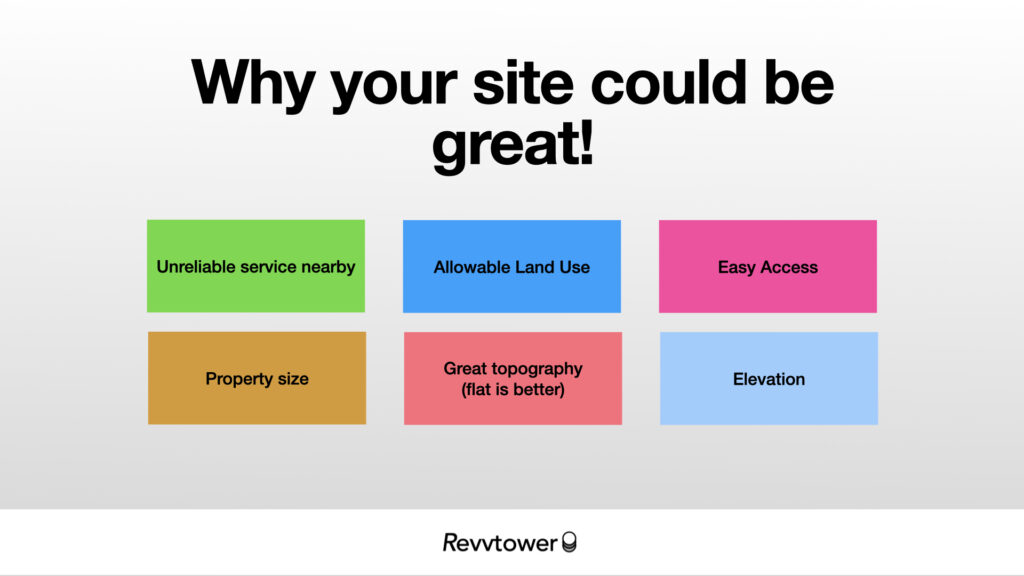
Not every property is suitable for cell tower placement. Wireless carriers look for specific characteristics when identifying potential sites, and understanding these factors can help you assess whether your land is a viable candidate.
Location and coverage gaps are paramount. Cell tower companies need to fill gaps in their network coverage or strengthen existing signals in high-traffic areas. Properties in areas with weak cellular service, near highways, in growing suburban communities, or in business districts are particularly desirable.
Zoning and regulatory compliance play a critical role. Your property must be properly zoned to allow telecommunications infrastructure. Commercially zoned land or agriculturally zoned properties typically face fewer obstacles than residentially zoned parcels, though exceptions exist depending on local ordinances.
Site accessibility is another essential consideration. Tower companies need year-round access to maintain equipment, which means properties with reliable road access are preferred. Remote locations with difficult terrain or seasonal accessibility challenges may be passed over for more convenient alternatives.
Property size and topography also matter. While you don’t need acres of land—a typical cell tower lease requires only a fenced compound measuring 50 by 50 feet to 100 by 100 feet—the property must accommodate not just the tower but also equipment shelters and adequate setback distances from property lines.
Height advantages can make your property stand out. Elevated terrain provides better signal propagation, which is why hilltops and ridgelines are highly sought after. Even modest elevation differences can significantly impact a site’s value to carriers.
Step-by-Step Process: How to Rent Your Land for a Cell Tower
Securing a cell tower lease requires patience and strategic planning. Here’s how to navigate the process from initial interest to signed contract.
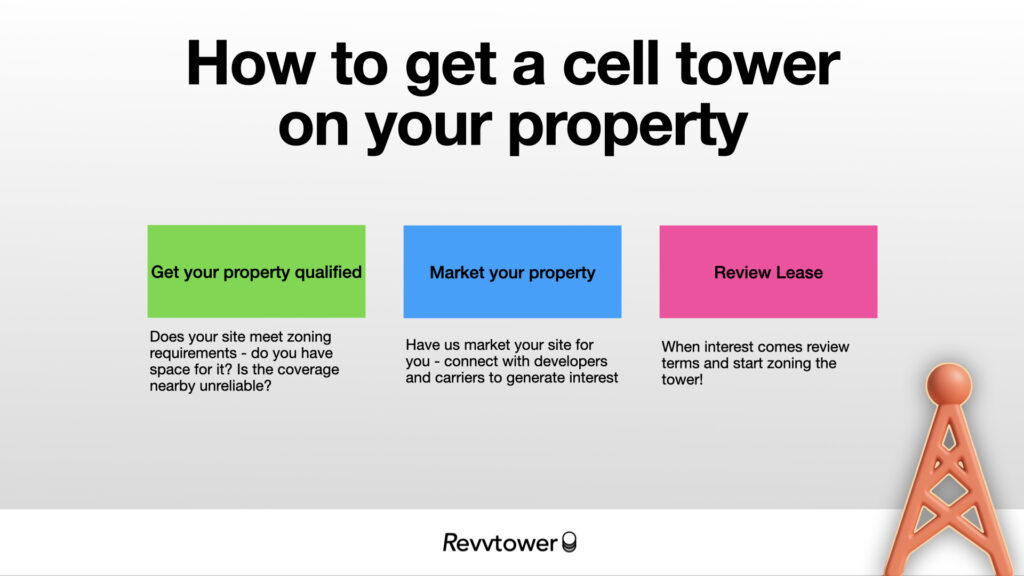
Step 1: Determine Your Property’s Suitability
Before reaching out to companies, conduct a preliminary assessment of your property. Check your local zoning ordinances to confirm telecommunications structures are permitted. Drive around your area to identify existing towers and assess whether your location could help fill coverage gaps.
You can also use cellular coverage maps from major carriers like Verizon, AT&T, and T-Mobile to identify weak signal areas near your property. These coverage gaps often indicate where carriers are actively seeking new sites.
Sign up for a property Pro Site Audit with Revvtower to streamline this and save money!
Step 2: Market Your Property to Cell Tower Companies
There are several approaches to getting your property noticed by the right companies:
Sign Up with Revvtower’s marketing program: We take care of all the marketing. We know all the major carriers and developers in your market to drastically increase the chances of getting a tower on your property. Having a property analysis completed will only further increase your chances because all the hard work is done!

Contact wireless carriers directly. Major carriers like Verizon Wireless, AT&T, and T-Mobile have site acquisition teams. Visit their corporate websites and look for sections related to site leasing, real estate, or network development. You can typically find contact information for their real estate or site acquisition departments.
Work with tower management companies. Independent tower companies like American Tower, Crown Castle, and SBA Communications build and lease tower space to multiple carriers. These companies are often more accessible than carriers themselves and actively seek new locations.
Register with cell tower leasing marketplaces. Several online platforms connect property owners with carriers and tower companies. Websites like Tower Genius, Landowner Solutions, and similar services can help market your property to multiple potential lessees simultaneously.
Hire a cell tower consultant or broker. Professional consultants who specialize in cell tower leases can market your property, handle negotiations, and ensure you secure favorable terms. While they charge fees or commissions, their expertise often results in significantly better lease agreements.
Step 3: Navigate the Initial Contact and Site Evaluation
Once a company expresses interest, they’ll conduct a thorough evaluation of your property. This typically involves:
Site surveys and radio frequency analysis to determine whether your location will effectively enhance their network. Engineers will test signal strength and propagation patterns to confirm the site’s viability.
Environmental assessments to identify any protected habitats, wetlands, or historical sites that could complicate construction. These studies ensure compliance with environmental regulations.
Zoning verification where the company confirms your property meets all local requirements. If special permits or variances are needed, the company typically handles these applications, though you may need to support the process.
During this phase, companies may request a letter of intent or option agreement that gives them exclusive rights to evaluate your property for a specified period, usually 60 to 180 days. Be cautious about signing these documents, as they can tie up your property while preventing you from negotiating with competitors.
Step 4: Negotiate Your Lease Agreement
This is the most critical phase where the terms of your long-term relationship are established. Key elements to negotiate include:
Monthly rental payments should be competitive and include annual escalation clauses. Industry-standard escalations range from 2% to 3% annually or 10% to 15% every five years. Never accept a flat-rate lease without built-in increases—inflation will steadily erode your income over time.
Lease duration and renewal options need careful consideration. While 25-year initial terms are common, be wary of excessive renewal options that could keep your land tied up for 75 years or more on outdated terms. Negotiate the right to renegotiate rental rates upon renewals.
Collocation revenue is often overlooked but potentially lucrative. When additional carriers add their equipment to the existing tower, you should receive supplemental income. Ensure your lease clearly specifies you’ll earn additional rent for each collocator, typically 25% to 50% of the primary lease rate.
Property access and maintenance responsibilities should be clearly defined. The lease should limit where the company can travel on your property and require they maintain their leased area, fencing, and access roads.
Liability and insurance provisions must protect you adequately. The company should carry substantial liability insurance and indemnify you against claims arising from their operations or equipment.
Termination rights should be mutual when possible, though companies typically resist this. At minimum, ensure you can terminate the lease if the company fails to pay rent, breaches agreement terms, or abandons the site.
Step 5: Understand the Construction Process
Once the lease is signed, construction typically begins within 6 to 18 months, depending on permitting requirements. The company will:
- Obtain necessary building permits and approvals
- Prepare the site with fencing and access improvements
- Construct the tower foundation and install the structure
- Install equipment shelters and telecommunications gear
- Complete testing and network integration
During construction, maintain communication with the company’s site acquisition team. Any damage to your property beyond the leased area should be promptly addressed and repaired at the company’s expense.
Common Pitfalls to Avoid When Leasing Land for Cell Towers
Property owners often make costly mistakes during the leasing process. Awareness of these pitfalls can save you thousands of dollars and prevent long-term complications.
Accepting the first offer without negotiation is perhaps the most expensive error. Initial offers from carriers are typically lowball figures designed to test your knowledge. Always negotiate, preferably with professional representation.
Failing to include escalation clauses means your income will lose purchasing power every year. A lease paying $1,000 monthly today will feel like $737 in 20 years at 3% inflation—and much less over 50 years.
Signing overly broad property access rights can create problems. Some leases grant carriers access to your entire property rather than just the leased compound and a defined access route. This can interfere with your use of surrounding land.
Overlooking collocation provisions costs property owners substantial income. Without clear collocation language, carriers may add multiple tenants to your tower while paying you nothing additional.
Neglecting legal review is dangerous. Cell tower leases are complex legal documents with long-term implications. Always have an experienced real estate attorney review the agreement before signing, preferably one with specific cell tower lease experience.
Ignoring local property value impacts can affect future development plans. While cell towers don’t necessarily decrease property values, they can affect your ability to develop or sell the property. Consider your long-term plans before committing to a multi-decade lease.
How Much Money Can You Make from a Cell Tower Lease?
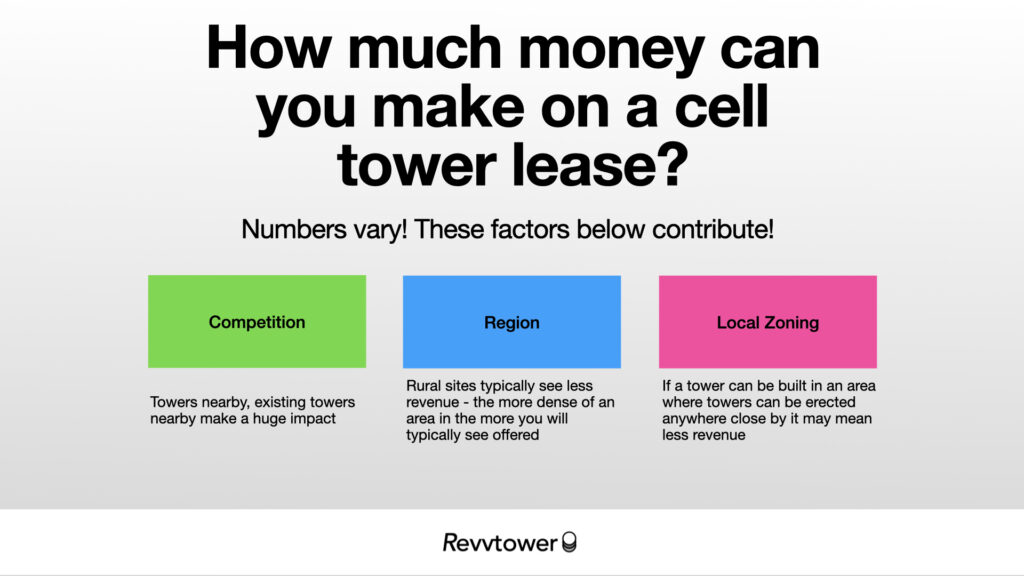
Cell tower lease income varies significantly based on multiple factors, but understanding typical ranges helps set realistic expectations.
Geographic location is the primary driver of lease rates. Urban and suburban properties in densely populated areas command premium rates between $2,000 and $5,000 monthly or more. Rural properties in less populated regions typically earn $500 to $1,500 monthly. Properties near major highways, shopping centers, or business districts often exceed typical rates.
Tower type and height influence value. Monopole towers, which are single-pole structures, typically require less space and are more aesthetically acceptable, sometimes commanding slightly lower rents. Lattice towers or guyed towers require more land but may support more equipment. Taller towers that serve larger coverage areas may justify higher lease payments.
Competition and carrier needs affect negotiations. If multiple carriers need coverage in your area, you have more negotiating power. Properties in areas with significant coverage gaps are particularly valuable.
Collocation income provides bonus revenue. Each additional carrier that adds equipment to your tower should generate $400 to $1,200 in additional monthly income. A tower with three carriers could generate $3,000 to $7,000 in total monthly revenue.
Over a 25-year lease term with modest escalations, a property owner earning $1,500 monthly with 2.5% annual increases would collect approximately $565,000 in total payments. Add collocation revenue, and lifetime earnings could easily exceed $1 million.
Tax Implications of Cell Tower Lease Income
Cell tower rental income has important tax considerations that property owners should understand and plan for.
The IRS treats cell tower lease payments as ordinary rental income, which means it’s typically taxed at your regular income tax rate. This income must be reported annually on Schedule E of your Form 1040.
Property tax impacts vary by jurisdiction. Some localities may increase your property tax assessment after a cell tower is installed, arguing it represents improved commercial use. However, the leased area is usually small relative to total property size, which often limits assessment increases.
Upfront lump sum payments are sometimes offered by companies or lease buyout firms. These are typically treated as capital gains if structured as a sale of the lease or ordinary income if structured as prepaid rent. The tax treatment can significantly impact your after-tax proceeds, so consult a tax professional before accepting lump sum offers.
1031 exchanges may allow you to defer taxes if you sell property with an existing cell tower lease, though specific requirements apply. This strategy requires careful planning with a qualified intermediary.
Consider consulting with a tax advisor who understands telecommunications leases to optimize your tax situation and avoid surprises.
Alternatives to Traditional Cell Tower Leases
Beyond conventional cell tower agreements, property owners have several alternative arrangements to consider.
Rooftop installations are increasingly popular, particularly in urban areas where ground space is limited. If you own a commercial building, carriers may want to mount equipment on your roof. Rooftop leases typically pay $1,000 to $3,000 monthly depending on location and building height.
Small cell installations represent the newest frontier in wireless infrastructure. These are low-power equipment boxes roughly the size of a backpack or small refrigerator, mounted on utility poles, streetlights, or building exteriors. Small cell leases typically generate $500 to $1,500 monthly per installation, and properties may accommodate multiple small cells.
DAS systems (Distributed Antenna Systems) consist of networks of antennas that improve indoor coverage in large buildings, stadiums, or campuses. If you own large commercial properties, DAS agreements can provide substantial income streams.
Ground lease with tower ownership is an arrangement where you own the tower structure and lease space to multiple carriers. This requires significant upfront investment but can generate superior long-term returns if you’re willing to manage the infrastructure.
Protecting Your Interests: Working with Cell Tower Lease Consultants
While you can certainly negotiate a cell tower lease independently, professional assistance often proves invaluable given the complexity and long-term implications of these agreements.
Cell tower lease consultants specialize in representing property owners during negotiations. They understand market rates, standard lease terms, and negotiation strategies that can substantially improve your agreement. Good consultants typically increase your lease value by far more than their fees cost. Sign up with Revvtower’s cell tower lease review for an affordable and fair price.
Attorney review is essential even if you work with a consultant. Real estate attorneys experienced in telecommunications leases can identify problematic clauses and ensure your legal rights are protected. The few hundred dollars spent on legal review can prevent costly problems over decades.
Appraisers and valuation experts can provide independent assessments of your property’s value to tower companies, strengthening your negotiating position with objective data.
When selecting consultants, verify they represent property owners exclusively rather than having relationships with carriers or tower companies that could create conflicts of interest. Check references from previous clients and understand their fee structure upfront—whether flat fees, hourly rates, or commissions based on improved lease terms.
Conclusion: Is Renting Your Land for a Cell Tower Right for You?
Leasing your land for a cell tower can provide substantial passive income for decades with minimal ongoing effort. However, success requires understanding what makes properties valuable, navigating a complex negotiation process, and securing lease terms that protect your interests while maximizing income.
The most successful property owners approach cell tower leasing as a significant business decision worthy of careful consideration and professional guidance. They take time to understand market conditions, refuse to accept initial offers without negotiation, and invest in expert advice when appropriate.
If your property has characteristics that wireless carriers value—strategic location, proper zoning, good access, and elevation advantages—renting your land for a cell tower could be an excellent opportunity. Take the time to do your research, seek professional guidance, and negotiate an agreement that will serve you well for decades to come.
The wireless industry continues expanding to accommodate ever-increasing data demands, which means carriers will need more sites in the years ahead. Property owners who position themselves strategically and negotiate effectively can benefit substantially from this ongoing telecommunications infrastructure buildout.